

YOGYAKARTA — The Rector of SMA Kolese De Britto, Fr. Agustinus Sugiyo Pitoyo, SJ, has encouraged alumni to continue planting seeds of kindness, strengthening brotherhood, and nurturing a spirit of service. Meanwhile, Henricus Dewanto Wibisono, Chair of the Presidium of the De Britto Alumni Association (Perkumpulan Alumni Kolese De Britto, or PAKDB) for the 2026–2030 term, has emphasized the need for internal reforms to make the organization more united, cohesive, and beneficial, while preparing alumni to become partners in mission.
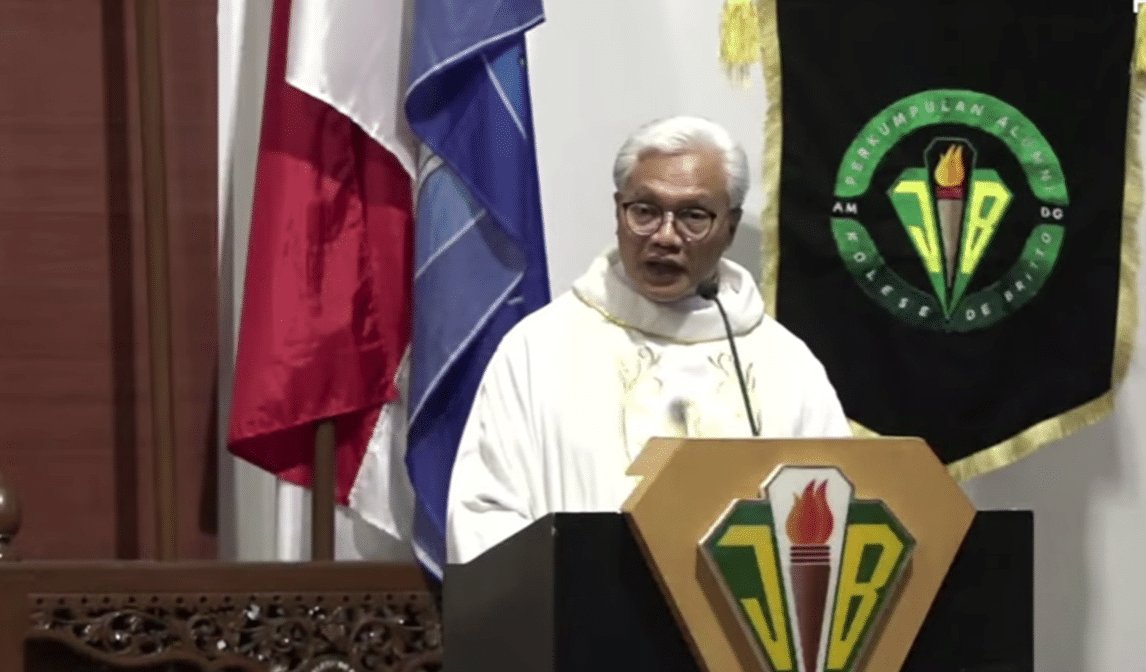
Fr. Pitoyo delivered his message during a Mass, leadership handover ceremony, and fellowship gathering of the De Britto Alumni Association on Saturday, 24 October 2026, in Yogyakarta. Henricus Dewanto Wibisono shared his views on the organization’s direction and reform agenda on a separate occasion.
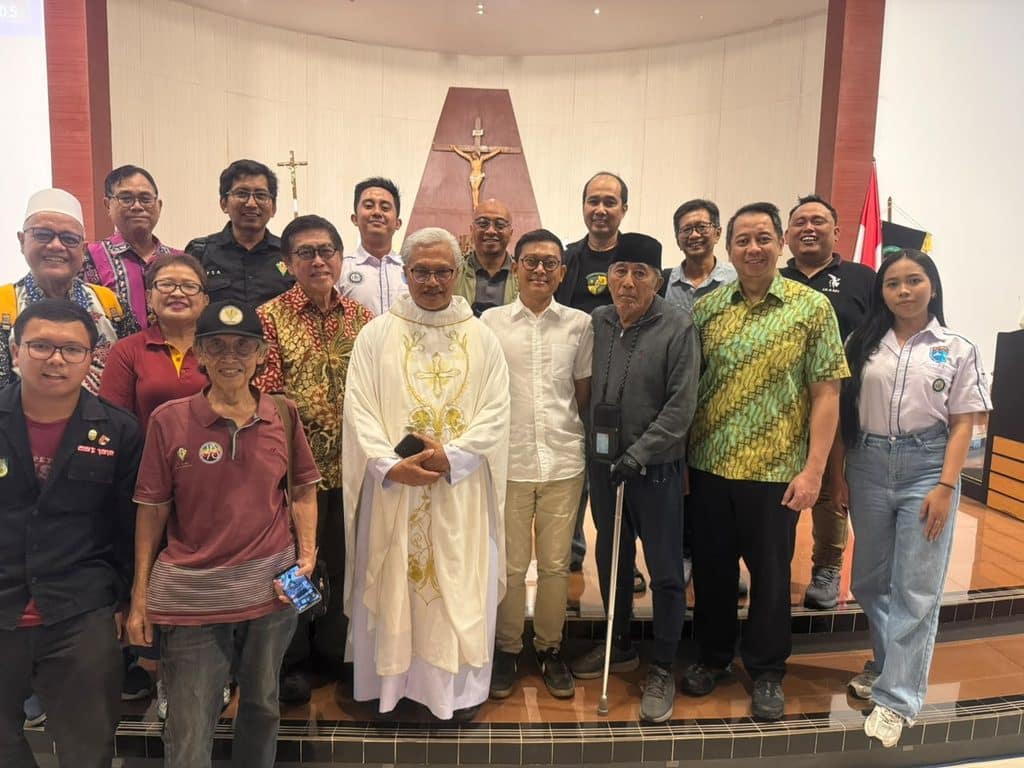
The Mass was celebrated by Fr. Sugiyo Pitoyo, SJ, accompanied by Fr. Ignatius Haryanto, SJ, and Fr. Fransiskus Xaverius Alip Suwito, Pr., a 1999 alumnus of SMA Kolese De Britto.
In his remarks, Fr. Pitoyo expressed gratitude for the successful election of the new PAKDB leadership for the 2026–2030 term. He also thanked the outgoing leadership for its service to the alumni community.
For Fr. Pitoyo, the existence of an alumni association is a sign that the spirit of education and brotherhood fostered at Kolese De Britto continues to live on after students have completed their studies.
He compared the alumni to fruits growing from the same tree. Although each grows and bears fruit in different ways, they share the same roots and origins.
He therefore encouraged alumni to look positively at the organization’s journey. Rather than focusing continually on shortcomings or things that have yet to reach their ideal state, alumni should recognize the goodness and strengths that have emerged through the service of previous leaders.
“Let us gather the positive things and turn them into strength,” Fr. Pitoyo said.
According to him, service does not always require grand gestures or extraordinary achievements. It can be expressed through simple acts or larger initiatives, provided they are motivated by goodwill.
He also urged alumni not to judge the previous leadership solely by its possible shortcomings. Instead, the experience gained and the good work already accomplished should serve as a foundation for continued service in the future.
Service as a Collective Endeavour
Reflecting on the Scripture readings during the Mass, Fr. Pitoyo emphasized that every member has a role to play in building a shared community. He likened the alumni association to a body made up of different parts, each with its own function and contribution.
Everyone can participate according to their abilities and responsibilities. The organization’s growth, therefore, depends not only on its chairperson or a handful of leaders but also on the willingness of all members to become involved.
This spirit of service is expected to guide the new PAKDB leadership for the 2026–2030 term. A change of leadership is not merely a change in organizational structure; it is an opportunity to continue what has been done well while developing new strengths.
Fr. Pitoyo also spoke of his personal connection with the alumni community through his own experience of Jesuit education, although he is not a graduate of SMA Kolese De Britto. That experience, he said, has helped him understand the bonds of brotherhood that endure among those who have been educated in the Jesuit tradition.
In concluding his message, Fr. Pitoyo reminded the alumni that love and brotherhood do not grow on their own. Both require concrete actions that bring goodness into the lives of others.
“Love blooms when kindness is planted,” he said.
His message served as a reminder that lasting brotherhood depends not only on the shared history of having attended the same school but also on a continued willingness to do good, serve, and support one another.
Henricus Dewanto Wibisono: Internal Reform to Rekindle the Alumni Torch
On a separate occasion, Henricus Dewanto Wibisono, commonly known as Hengki, said the new leadership needed to strengthen the organization’s foundations so that it could become more cohesive and deliver greater benefits to alumni and society.
“We do need internal reforms to make the organization more united and beneficial. By doing so, we hope to rekindle the alumni torch and prepare ourselves to become partners in mission,” Hengki said.
One of the main priorities of the PAKDB leadership for 2026–2030 is to revise its Articles of Association and Bylaws (Anggaran Dasar dan Anggaran Rumah Tangga, or AD/ART). According to Hengki, several provisions remain unclear and need to be improved so that the rules can provide a solid foundation for the association’s operations.
The revision is expected to clarify membership, governance, and organizational procedures. Clearer rules would provide the alumni association with a stronger basis for implementing programmes and ensuring leadership continuity.
Hengki also highlighted the importance of establishing a clearer definition of who qualifies as an alumnus. A well-defined membership framework is necessary to strengthen the organization’s foundations and encourage broader participation.
The new leadership is also prioritizing leadership development and succession planning, particularly in preparation for future elections of the association’s chairperson. The process needs to begin early so that leadership regeneration does not depend solely on elections held at the end of a term.
For Hengki, internal reform is not an end in itself. A better-organized association should serve as a means of reviving the spirit of brotherhood and service that forms part of the alumni’s experience of Jesuit education.
He called on alumni to rediscover the meaning of belonging to a community shaped by the same educational tradition. This brotherhood, he said, needs to be translated into a willingness to participate in a broader mission.
His hope is that those who have emerged from Jesuit education will come together again as one family, prepare themselves to become partners in mission, and rekindle the alumni torch.
The concept of partners in mission emphasizes that alumni are connected not merely by memories of their school days but also by the opportunity to carry forward the values they received through concrete action. This spirit can be expressed through collaboration, social concern, the development of members’ potential, and service to others.
In this context, the alumni association can become a space for bringing together the diverse experiences, expertise, and abilities of its members. Each alumnus can contribute according to their capacity and field of service.
PAKDB Leadership Team 2026–2030
To implement its organizational agenda, PAKDB has established a leadership team for the 2026–2030 term, with responsibilities divided among administration, finance, internal alumni affairs, relations with the alma mater, digital development, and communications and publications.
Henricus Dewanto Wibisono (JB 95) serves as Chair of the Presidium. He is supported by Haryo Bimo Utomo (JB 2000) as Secretary-General and Antonius Tomy Pri Hendratmoko (JB 96) as Deputy Secretary-General.
Financial affairs are handled by Ignatius Kurniawan (JB 94) as Treasurer and Mario Rosario Morisi Jusup (JB 94) as Second Treasurer.
To strengthen alumni engagement and relations with the alma mater, Stefanus Atyanto Nandiwardhana (JB 08) serves as Presidium for Internal Alumni Affairs, while Yulianus Tri Agung Pujantoro (JB 95) is responsible for the Presidium for Alma Mater Relations.
The digital division is led by Laurentius Tedi Wintoko (JB 96) as Presidium for Digital Affairs, supported by Riza Tantular (JB 94) on the JB Circle Technical Team.
Meanwhile, communications and publications are overseen by Stephanus Novi (JB 11) as Presidium for Communications and Publications, with Bowo Sarjito (JB 00) serving as a team member.
Organizational oversight is entrusted to a Supervisory Board consisting of Gunawan Wibisono (JB 86) and Koesmargono (JB 77).
This division of responsibilities is expected to support internal reform while expanding alumni participation in various activities. Strengthening communications, making use of digital technology, and maintaining close relations with the alma mater are important elements in building a more open and beneficial organization.
Strengthening Brotherhood Across Alumni Communities
The gathering and leadership transition also provided an opportunity to strengthen PAKDB’s relationships with other alumni communities and educational institutions, fostering a broader network of friendship and collaboration.
Representatives included Hans Wisenda and Hapsoro from Kolese Kanisius (CC); Rio and Tasya from Kolese PIKA (ATPIKa); and Celo, addressed as Mbak Celo, from IKASADHA, Sanata Dharma University.
Also present were Ariston from Gonzaga (Gonz), Bambang Riyanto from IKAMI, Aneksa from IKAMI Jogja, and two former JB chairpersons, Haji Datuk and Bardono. Josep Oris represented the Merto community.
The presence of representatives from various communities highlights the importance of maintaining relationships among alumni groups and educational institutions. Brotherhood need not be confined to a particular school or graduating class; it can grow into a wider network of cooperation and service.
For the new PAKDB leadership, this spirit aligns with its aspiration to rekindle the alumni torch. The organization is expected to become more than a place to gather and reminisce about school days. It should also provide a space for mutual support, the development of members’ potential, and initiatives that bring tangible benefits to society.
Fr. Pitoyo’s message about planting kindness and Hengki’s call to become partners in mission converge on one central idea: brotherhood remains alive when it is expressed through concrete action.
Through organizational reform, leadership development, stronger relations with the alma mater, and collaboration across alumni communities, PAKDB hopes to bring together the strengths of its members. In this way, the torch of brotherhood passed on through Jesuit education can continue to shine and inspire service to others.