

MANILA — The Church in Asia is being called to rethink the way it carries out its mission in the digital world. Digital mission is not simply about producing more content or pursuing followers and engagement, but about becoming an authentic presence for people searching for meaning, connection and faith.
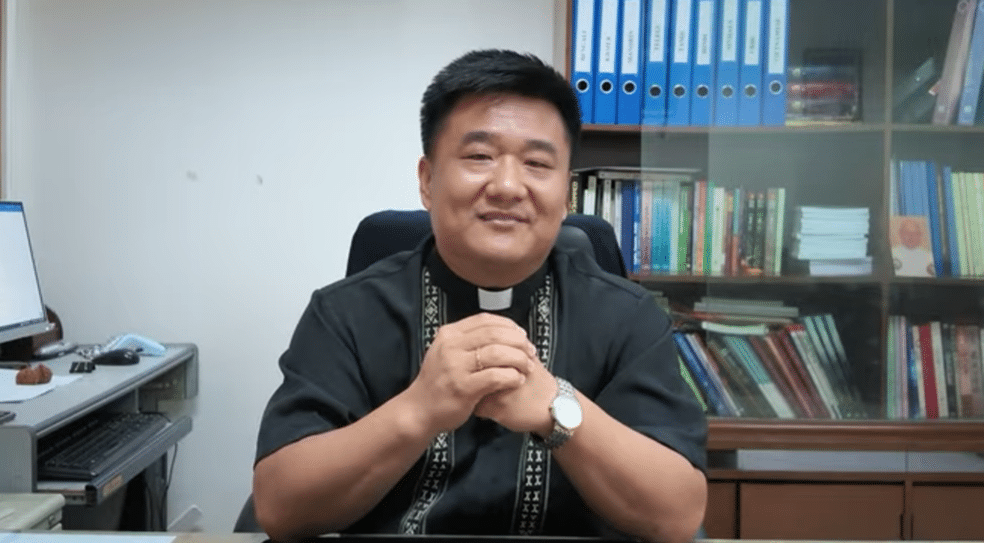
Fr. John Mi Shen, executive secretary of the Office of Social Communication of the Federation of Asian Bishops’ Conferences (FABC-OSC) and program director of Radio Veritas Asia (RVA), made the call ahead of the Asian Catholic Digital Missionary Assembly 2026.
The first gathering of Catholic digital missionaries and communicators from across Asia is being held from September 10–13, 2026, at Radio Veritas Asia in the Philippines.
The assembly carries the theme “From Influencers to Witnesses: A Synodal Way for Digital Mission in Asia.”
According to Fr. Mi Shen, the theme speaks directly to the reality of the Church today. The digital world has become an integral part of people’s lives, with communication increasingly taking place through mobile phones, digital screens and social media.
Yet the Church is not called simply to fill digital spaces with more content.
“As a Church, we are not called simply to produce more content or to become more influential. We are called to become witnesses,” he said in his message ahead of the gathering.
Listening before speaking
Fr. Mi Shen said effective digital evangelization should begin with listening and accompaniment rather than simply deciding what message should be published online.
“Before asking, ‘What should we communicate?’ we should ask, ‘What are people experiencing? What are they searching for?’” he said.
He identified three essential movements for digital mission: listening, accompanying and witnessing.
A video, podcast, Bible reflection or social media post can become an opening for an encounter. But the ultimate purpose should not simply be to increase the amount of content, views or engagement.
“Behind every screen is a person who is looking for meaning, connection, and sometimes simply someone who will listen to them,” he said.
Digital mission, therefore, should be understood as an effort to build relationships with the people behind the screens.
Technology as a bridge
The experience of Radio Veritas Asia, particularly through its Mandarin Service and Bible study initiatives, demonstrates how digital platforms can overcome geographical and social barriers.
Through digital spaces, people who have limited opportunities to participate in parish activities, meet priests or attend Bible studies in person can still build relationships and grow in faith.
Online Bible study, for example, does not have to stop at the transmission of biblical information. It can become a space where participants read Scripture together, share their experiences, ask questions and support one another.
At the same time, Fr. Mi Shen stressed that digital ministry is not intended to replace face-to-face pastoral ministry.
“Digital ministry is not a replacement for traditional pastoral ministry, but a complement and a bridge,” he said.
Digital and pastoral spaces, therefore, should not be seen as competing with one another. Rather, they can complement each other in bringing the Church closer to people’s lives.
Asia cannot be addressed uniformly
Another challenge for digital mission in Asia is the continent’s diversity of cultures, languages, religions and ecclesial experiences.
Asia is a continent of many languages and distinct cultural contexts. The Church therefore cannot reach the whole of Asia simply by translating the same message into different languages.
“Translation is important, but inculturation is deeper than translation,” Fr. Mi Shen said.
For him, communion does not mean uniformity. Instead, communion is built through a willingness to listen to different communities and learn from their experiences.
In this context, RVA’s multilingual services play an important role. Through different languages, Catholics can encounter the voices and experiences of other Churches across Asia.
The gathering of digital missionaries is also expected to provide an opportunity for participants to listen to one another, learn from each other and discover new ways of working together in digital mission amid Asia’s diversity.
From followers to those being served
The theme From Influencers to Witnesses also challenges Catholic communicators to reconsider what it means to have influence in the digital world.
“An influencer normally asks, ‘How many people are following me?’ A witness asks, ‘Whom am I serving, and what am I witnessing to?’” Fr. Mi Shen said.
The distinction points to a fundamental shift in how the Church understands its presence in digital media.
Digital missionaries are not called to pursue popularity for its own sake. Whatever influence they have should be directed toward serving people and leading them closer to Christ.
The credibility of a digital message, he added, ultimately depends on the life of the person delivering it.
“If our digital presence is beautiful but our life does not reflect the Gospel, our message will eventually lose its credibility,” he said.
Catholic communicators, therefore, are not simply called to produce content about Christ.
“We should not try simply to become famous for Christ; we should try to make Christ known through our lives,” he said.
Building a community of digital missionaries
The Asian Catholic Digital Missionary Assembly 2026 is intended to be more than a conference where participants listen to speakers and attend various sessions.
It is envisioned as a space of encounter—an encounter of people, stories and hearts—and as an opportunity to build a community of digital missionaries across Asia.
Through FABC-OSC and RVA, the Church hopes to build not merely a network of communicators but a community capable of accompanying young people and bringing the Gospel into the digital spaces where they live.
Such collaboration is also important for connecting local Churches across Asia and bringing local voices to wider audiences.
“Platforms will come and go,” Fr. Mi Shen said. “But the mission remains the same: to bring people closer to Christ and to build communion.”
Digital mission, therefore, is ultimately not about technology, algorithms, follower counts or popularity. It is about people and relationships.
Catholic digital missionaries in Asia are called to listen to those behind the screens, accompany them in their journeys of life and faith, and bear witness to the joy and hope they have received from Jesus Christ.
Jesus Christ, the opening message of the assembly emphasized, is the perfect communicator of God’s love.
From this, the Church’s digital mission finds its fundamental direction: not simply to produce more content, but to make Christ present through the lives of authentic witnesses.