

YOGYAKARTA, Indonesia — Jesuit higher education must respond boldly to an increasingly complex world by strengthening its Ignatian identity, expanding global collaboration, embracing responsible innovation, and ensuring that quality education reaches those living on the margins of society.
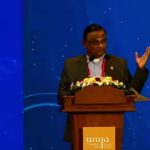
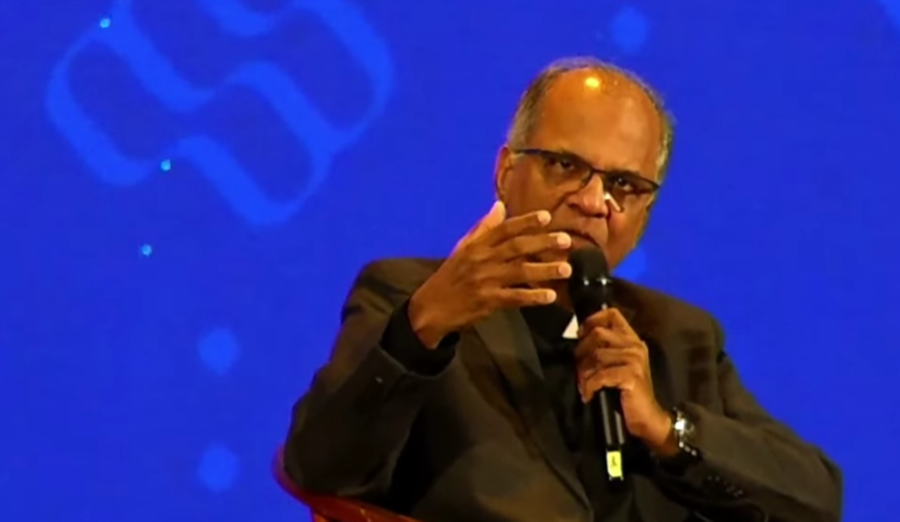
That was the central message delivered by Fr. Joseph Christie, SJ, Secretary for Higher Education of the Society of Jesus, during his presentation to delegates attending the World Union of Jesuit Alumni (WUJA) Congress XI in Yogyakarta, Indonesia from 29 July – 2 August. Reflecting on the evolution of Jesuit higher education over the past two decades, Fr. Christie outlined both the remarkable growth of the international Jesuit university network and the significant challenges that lie ahead.
“I simply want to share with you what we are doing in higher education as we remain united in spirit and purpose,” he said as he began his address.
A New Chapter for Jesuit Higher Education
Fr. Christie explained that until 2007, all Jesuit educational institutions—from primary schools to universities—were administered under a single Secretariat for Education at the Jesuit General Curia in Rome.
Recognizing the increasing complexity and strategic importance of higher education, the Society of Jesus established a separate Secretariat for Higher Education in January 2007. Since then, the office has continued to grow in scope and influence, and Fr. Christie now serves as its third secretary.
To illustrate this journey, he presented a historical overview tracing the development of the global Jesuit university network.
The first major milestone came in April 2010, when leaders of Jesuit universities gathered in Mexico City for the First International Assembly of Jesuit Higher Education under the theme Networking Jesuit Higher Education for a Globalizing World: Shaping the Future for a Humane, Just and Sustainable Globe.
During that assembly, then Superior General Fr. Adolfo Nicolás, SJ, warned against what he called the “globalization of superficiality.” He urged Jesuit universities to cultivate deeper intellectual reflection and creative imagination rooted in the Ignatian tradition.
Fr. Nicolás also proposed something that would fundamentally reshape Jesuit higher education worldwide: the creation of a global network capable of taking advantage of the Society’s worldwide presence and modern communication technologies.
His vision gradually became reality.
In Melbourne in 2015, delegates expressed overwhelming support for establishing a formal international association. Three years later, during the 2018 assembly in Bilbao, Spain, the International Association of Jesuit Universities (IAJU) was officially inaugurated, with its charter signed at the Basilica of St. Ignatius.
The gathering also launched several collaborative initiatives, including projects on democracy, learning and immersion, together with commissions dedicated to justice, migration, and student exchanges.
Addressing that assembly, Jesuit Superior General Fr. Arturo Sosa, SJ, emphasized that Jesuit education seeks to form people who recognize themselves as members of one human family.
“We want to educate human beings who become critically aware of their own culture, joyfully appreciate the cultures of others, and build relationships that foster fraternity, equality and social justice,” Fr. Christie recalled.
An Intellectual Apostolate Serving the Universal Mission
Looking beyond history, Fr. Christie reminded participants that higher education remains one of the Society of Jesus’ oldest and most significant apostolic ministries.
The Jesuit intellectual apostolate, he noted, continues to be one of the Society’s major priorities as affirmed by the General Congregation. Universities therefore are not merely academic institutions but essential instruments of the Church’s evangelizing mission.
Jesuit higher education dates back nearly five centuries. The first Jesuit school opened in 1548, followed by the establishment of the Roman College in 1551, today known as the Pontifical Gregorian University.
Today, the Jesuit network includes 177 institutions of higher education, serving approximately 800,000 full-time students worldwide. Including part-time students, enrollment exceeds one million.
Latin America represents the largest regional network, with more than 232,000 students, while Africa currently has fewer than 5,000 students enrolled in Jesuit higher education institutions.
According to Fr. Christie, the International Association of Jesuit Universities pursues four principal objectives: promoting collective reflection on the Jesuit higher education ministry, strengthening collaboration and networking among institutions, supporting the development of Jesuit higher education worldwide, and expanding educational opportunities for marginalized communities and those living on the frontiers.
A Global Structure with a Shared Mission
Fr. Christie explained that Jesuit higher education is organized through six regional conferences: North America, Latin America, Europe, Africa, South Asia, and Asia Pacific.
The role of IAJU, however, is not administrative.
“We do not make operational decisions for individual universities,” he explained. “Our responsibility is to provide strategic direction according to what the Superior General and the Society of Jesus ask of us.”
To accomplish this mission, IAJU is guided by a Board of twelve representatives drawn from the regional conferences and supported by numerous task forces responsible for advancing strategic priorities.
Preserving Jesuit Identity in a Changing World
Among the greatest challenges facing Jesuit universities today, Fr. Christie identified the preservation of Jesuit identity and mission in increasingly secular and materialistic societies.
Quoting Fr. Arturo Sosa, he stressed that the identity of a Jesuit university cannot be measured simply by the number of Jesuits working on campus.
Instead, its identity depends upon whether the institution shares a common culture inspired by Ignatian spirituality and remains united in its educational mission.
A survey conducted among university presidents also revealed another pressing concern: the mental well-being of students, particularly in the aftermath of the COVID-19 pandemic.
Artificial intelligence represents another major challenge.
Rather than resisting technological change, Jesuit universities must discern how AI can be responsibly integrated into teaching, learning, and research while remaining faithful to their educational mission.
Other significant challenges include the rising cost of education that limits access for poor students, faith formation within increasingly pluralistic and secular societies, unstable social and political contexts in many countries, financial pressures facing universities, growing collaboration among institutions, and the declining number of Jesuits available for leadership.
Fr. Christie pointed to the United States as an example. Ten years ago, only three of the country’s 27 Jesuit universities were led by lay presidents. Today, only three are still headed by Jesuits, while the remaining 24 are led by lay leaders.
Eight Strategic Priorities for the Future
In response to these realities, IAJU has adopted eight major priorities that will guide Jesuit higher education over the coming years.
The first is strengthening mission formation and ensuring that Jesuit identity becomes deeply integrated into university life.
The second addresses the opportunities and ethical implications of artificial intelligence.
The third focuses on promoting the holistic well-being of students.
The fourth gives renewed attention to peace and reconciliation, reflecting one of the Society of Jesus’ central apostolic commitments.
Additional priorities include fostering global citizenship and democracy, advancing integral ecology, developing a new Ignatian paradigm for business education, and expanding educational opportunities for people living in poverty and social exclusion.
Each priority is entrusted to a dedicated international task force responsible for establishing concrete objectives and action plans. Fr. Christie noted that scholars such as Michael Schuck and Nancy Tuchman are leading the task force on Integral Ecology.
Collaboration as the Way Forward
One of the strongest themes throughout Fr. Christie’s presentation was collaboration.
Following the most recent IAJU Assembly held in Bogotá, Colombia, Jesuit universities have committed themselves to strengthening cooperation both within their own regions and across international boundaries.
Professional associations now connect Jesuit business schools, engineering schools, and other academic disciplines. Similar initiatives are underway to unite schools of education and law.
Student mobility has also expanded through the Margins Exchange Program, which enables students to study across Jesuit institutions worldwide while engaging with communities living on society’s margins.
Another significant initiative is Jesuit Worldwide Learning (JWL), which provides online education for refugees, migrants, displaced persons, and others who would otherwise have little or no access to higher education.
Research collaboration is likewise growing rapidly through the Global Research Alliance of Jesuit Universities, officially launched during the Bogotá assembly. Already involving more than twenty institutions, the alliance held its first international research conference in Manila earlier this year.
A New Center for Peace in Hiroshima
Looking toward the future, Fr. Christie announced plans to establish the Arrupe Center for Peace and Reconciliation in Hiroshima, Japan.
The center will honor Fr. Pedro Arrupe, SJ, who served in Hiroshima during the atomic bombing and cared personally for many of its victims.
Scheduled to open in 2028 alongside the next International Assembly of Jesuit Higher Education at Sophia University in Tokyo, the center will promote spiritual renewal while offering academic programs in peacebuilding, reconciliation, and democracy.
Expanding Global Access
Fr. Christie also shared another emerging initiative.
The Secretariat had originally envisioned creating a Jesuit Global University, but later concluded that the name could be misleading.
Instead, the project is evolving into a Jesuit Global Platform, a worldwide educational platform designed to offer mission-oriented academic programs, particularly for people living on the frontiers who are unable to access conventional university education.
Three Mandates from the Superior General
Concluding his presentation, Fr. Christie shared three specific mandates recently entrusted to the Secretariat by Jesuit Superior General Fr. Arturo Sosa.
The first is to strengthen higher education in Africa, where institutions continue to grow despite limited resources and relatively small student populations. Europe has been specifically encouraged to assist this effort.
The second is to reinforce Jesuit universities’ role as centers of intellectual leadership by promoting research that addresses the world’s most urgent contemporary issues.
The third is to deepen the Society’s commitment to serving the poor by developing innovative educational models capable of reaching communities traditionally excluded from higher education.
Finally, Fr. Christie introduced the small international team supporting the Secretariat’s mission and highlighted its regular bilingual newsletter, published every two weeks in English and Spanish, together with special editions showcasing best practices, pedagogical innovation, reconciliation initiatives, research, and other developments across Jesuit higher education worldwide.
“Our mission,” Fr. Christie concluded, “is ultimately to strengthen collaboration so that Jesuit higher education can better serve both the Church and the world.”