

YOGYAKARTA – Yogyakarta Governor Sri Sultan Hamengku Buwono X has called on Jesuit alumni from around the world to embrace a model of leadership rooted in conscience, moral courage, and service to humanity amid a world increasingly marked by distrust, ecological crises, and the erosion of shared values.
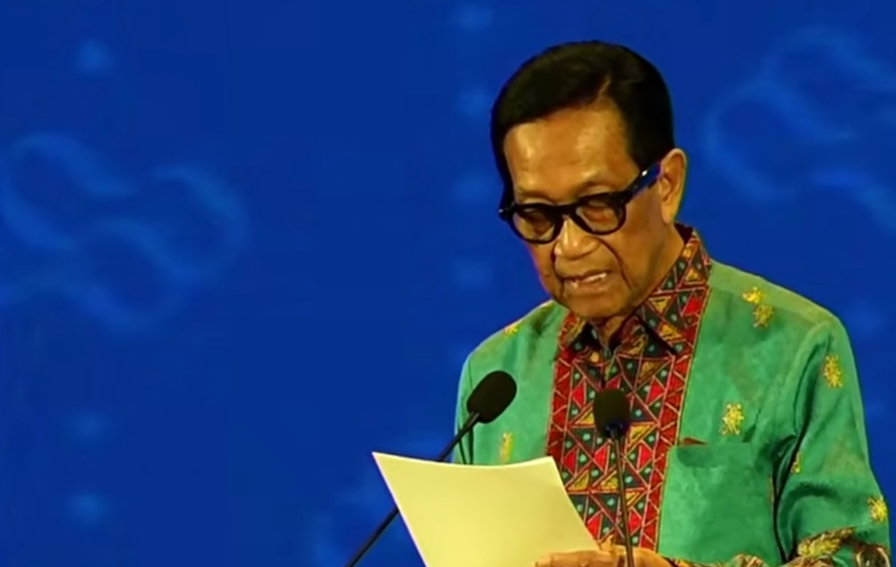
The Governor delivered the message in his welcoming remarks at the opening of the 11th World Union of Jesuit Alumni (WUJA) Congress in Yogyakarta on Thursday, July 30. Held under the theme United in Spirit, Leading with Purpose, the congress brings together graduates of Jesuit educational institutions from across the globe to reflect on their role in fostering a more just, peaceful, and humane world.
In his address, Sultan Hamengku Buwono X highlighted Yogyakarta’s longstanding relationship with Jesuit education. Institutions such as Kanisius schools, De Britto College, and Sanata Dharma University, he said, have played a vital role in shaping generations of intellectually capable individuals whose education is inseparable from character formation and service to society.
“Whenever I find myself among the great Jesuit family,” he said, “I feel as though I am returning to an old conversation—about knowledge that finds its true dignity when translated into action, faith that becomes light when expressed in service, and brotherhood that moves beyond memory into a shared mission.”
The Governor also reflected on a central teaching of the Catholic tradition: wherever love and compassion dwell, God makes His presence known. That spirit, he noted, has sustained the World Union of Jesuit Alumni throughout its 70-year journey since its founding in 1956 and continues to inspire the organization as it gathers for its 11th Congress in Yogyakarta.
For Yogyakarta, hosting the congress is far more than welcoming international guests. Drawing from Javanese values, Sultan explained that every guest is regarded as a trust of the heart, bringing stories, experiences, prayers, and hopes. Hospitality, therefore, becomes an opportunity to create a space where people can listen to one another and discover a shared rhythm despite their differences.
The Governor further connected the congress theme with the philosophy found in Serat Sastra Gendhing, a classical work by Sultan Agung. In the text, literature represents meaning while gendhing, or traditional Javanese gamelan music, represents rhythm. Meaning without rhythm becomes dry, while rhythm without meaning is merely sound. Together, they form harmony.
He said the congress theme, United in Spirit, Leading with Purpose, echoes this philosophy. Unity of spirit, he explained, resembles the harmony of gamelan music, requiring people to hear different voices without rushing to silence them. Leadership with purpose, meanwhile, demands clarity of vision, steadfast values, and the courage to dedicate oneself to service.
Reflecting on today’s world, Sultan observed that although society is surrounded by an overwhelming abundance of voices and information, people increasingly long for silence that can guide the conscience. Referring to Sufi wisdom and the writings of Jalaluddin Rumi, he likened humanity to a bamboo flute that can only produce a soul-stirring melody when it possesses an inner emptiness capable of listening deeply.
Leadership, he stressed, should therefore never be measured solely by the strength of one’s voice or authority. Instead, true leadership is revealed in the ability to hear the quiet voices of others, to understand uncertainty, and to exercise authority without losing one’s humanity. A genuine leader, he added, is willing to choose the quieter path of humility so that the common good always prevails over personal ambition.
The Governor also drew upon Javanese cultural wisdom found in Serat Rama, the Javanese adaptation of the Ramayana. The work teaches three levels of human conduct: nistha, what should be avoided; madya, what should be understood; and utama, what should ultimately be practiced.
Within that framework, courage acquires its deepest meaning, he said. Citing Nelson Mandela, Sultan noted that courage is not the absence of fear but the ability to master it. Yet genuine courage goes even further—it is the willingness to continue choosing the path of virtue even when that path is difficult, unpopular, and unlikely to earn immediate praise.
He also referred to Socrates, who viewed self-examination as the beginning of wisdom. In Javanese tradition, this reflective journey is expressed through the practices of niti, nitik, napak, and nanting—carefully discerning reality, recognizing its signs, examining one’s own conduct, and ultimately choosing one’s path with responsibility.
Sultan emphasized that any meaningful effort to transform the world must begin with the willingness to examine how people perceive the world itself. From this perspective emerges the Javanese philosophy of Hamemayu Hayuning Bawana, which calls people to honor life, preserve the beauty of creation, and promote the flourishing of all living beings.
He noted that this philosophy resonates deeply with the Ignatian practice of discernment, which encourages individuals to distinguish between impulses driven by personal ambition and those arising from genuine devotion. At times, he said, people must pause—not because they doubt their path, but because they seek to ensure that every step remains faithful to the deepest voice of conscience.
Concluding his address, Sultan expressed hope that the 11th WUJA Congress would become a shared space for reflection on the future direction of Jesuit alumni after seven decades of their global journey. He encouraged participants to continue placing their knowledge, faith, and commitment at the service of humanity.
“If the world today appears fractured,” he said, “our task is not to widen those fractures, but to transform them into spaces where love, reason, and moral courage can flourish.”
On behalf of the Regional Government of the Special Region of Yogyakarta, he welcomed all delegates to the congress and expressed his hope that Yogyakarta would become a place where unity finds its rhythm, leadership discovers its purpose, and service ultimately finds its way back to humanity.
Finally, he invited participants to nurture “the small flame within each of us—a flame that does not burn, but illuminates; a flame that does not consume our differences, but enables us to recognize one another as fellow creations of God.”