

JAKARTA— The 11th Congress of the World Union of Jesuit Alumni (WUJA) in Yogyakarta did not end with the successful conclusion of an international gathering. For the committee members, spiritual companions, and organizers involved in the event, the WUJA 2026 Congress became a spiritual experience and a lesson in leadership, demonstrating how Ignatian values can be translated into concrete action.
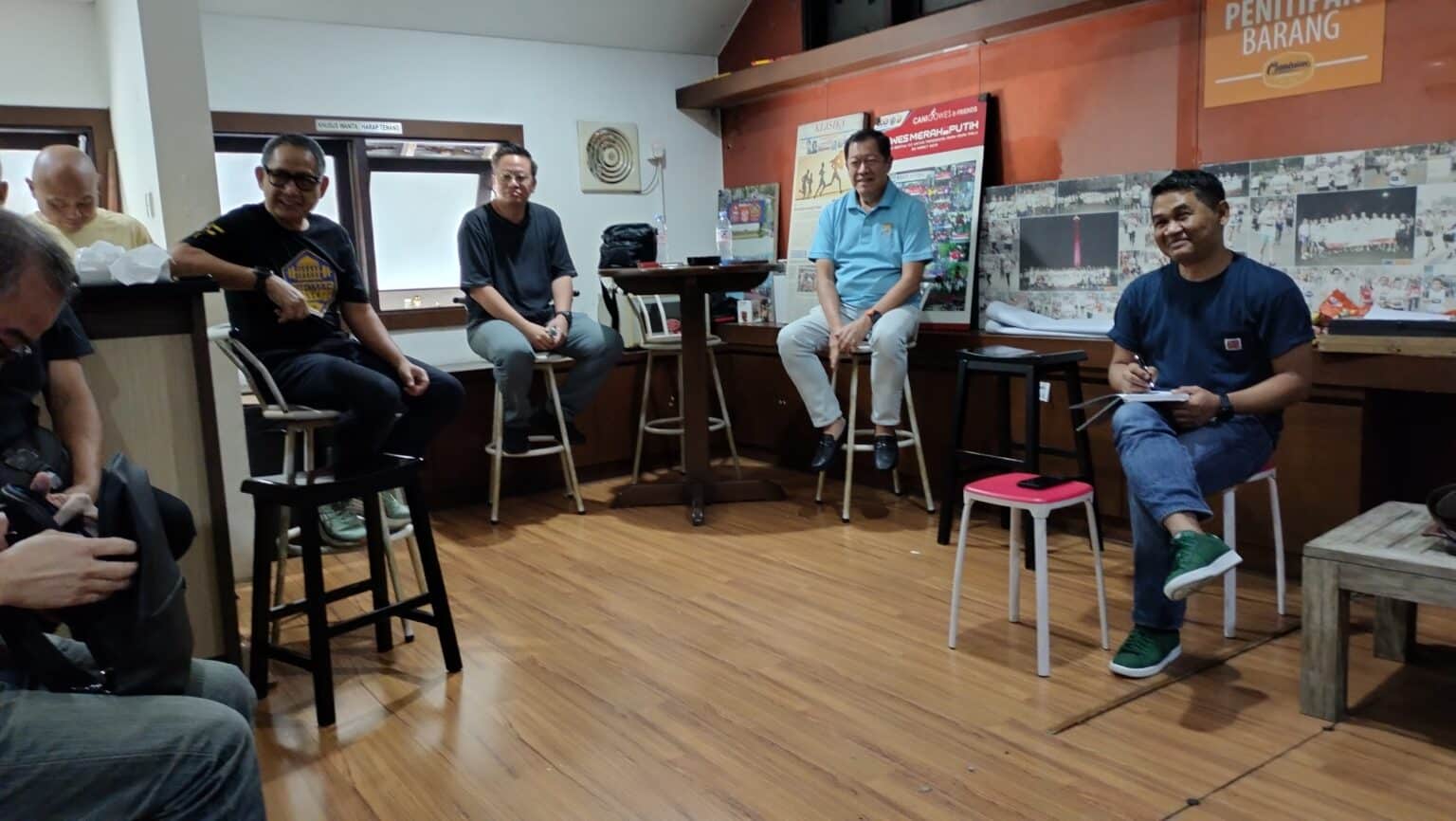
This emerged during a reflection session with members of the WUJA Steering Committee (SC), Organizing Committee (OC), and others involved in the organization, guided by Jesuit Father Agustinus Setyodarmono SJ (Fr. Nano), after the entire WUJA XI program had concluded in Yogyakarta.
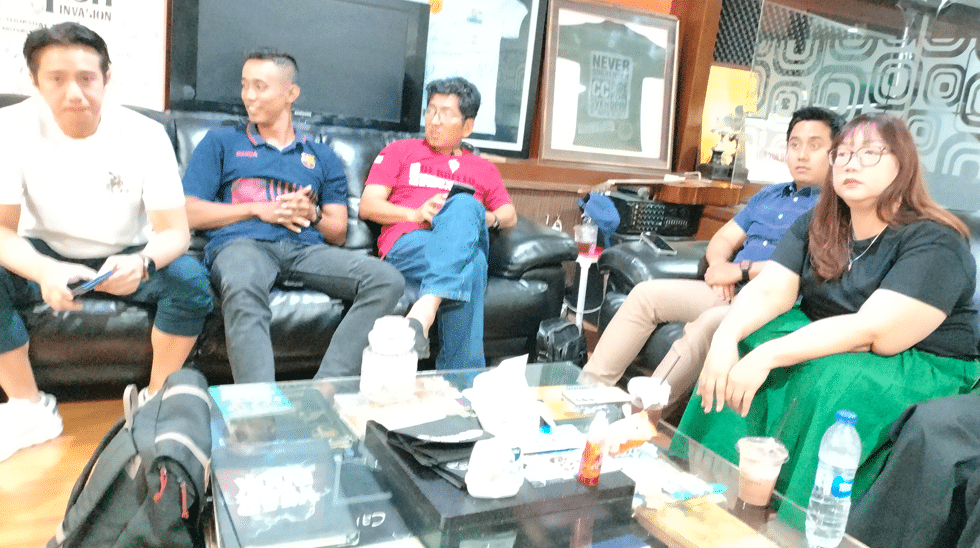
The recollection, held from approximately 9:00 a.m. to 12:00 noon on Monday, August 17, 2026, in the Alumni Room on the fifth floor of the Kolese Kanisius Building in Jakarta, provided an opportunity to look back on the long journey of preparing for the Congress—from Indonesia’s appointment as host country to the implementation of the event—and to read that experience in the light of Ignatian spirituality.
Various technical difficulties, time pressures, funding challenges, the management of international participants, security and health concerns, and the accompaniment of young participants were seen instead as spaces in which to experience Providentia Dei, or divine providence.
For those taking part in the recollection, the experience of WUJA 2026 showed that the success of an event is not determined solely by careful planning. There is also a dimension of trust, fraternity, the courage to make decisions, the ability to listen, the willingness to give others space, and the conviction that God works through people and through the encounters that take place.
The Long Journey Behind the Congress
The preparation for WUJA XI took place over an extended period and involved many people from different backgrounds, professions, age groups, and levels of experience.
For some committee members, their involvement in WUJA had to be carried out alongside their professional responsibilities. Ari, for example, was still dealing with an information technology crisis at his workplace until shortly before his departure for Yogyakarta. Yet his involvement in WUJA was seen as an opportunity that might come only once in a lifetime.
Meanwhile, Machin and the OC team held meetings almost every day, often until late at night, for about a month leading up to the Congress. This intense workload took place amid the professional commitments of each committee member.
The situation demonstrated that WUJA was not prepared by people working full-time as professional event organizers. Rather, the Congress was built by alumni who contributed their time, energy, expertise, and networks while continuing to manage their professional and family responsibilities.
For this reason, one of the strongest experiences highlighted during the recollection was gratitude for the solidarity and cohesion of the team.
The various problems that arose could not always be resolved through procedures established in advance. In many situations, the committee had to adapt, make quick decisions, help one another, and trust the competence of other team members.
This experience was then understood as a concrete expression of the magis: not merely completing a task, but striving to give one’s best in service of a greater mission.
When Courage Overcomes Anxiety
This experience was particularly felt by the younger members of the committee. Angel and Tyas, for example, experienced their involvement in an international Congress as a first opportunity to work alongside senior figures with remarkable experience and expertise.
At first, there were anxieties. They had to work with people who were more senior while also taking responsibility for accompanying around 100 young participants at Laboratorium Alam, or Lab Alam.
Gradually, however, the experience changed the way they saw themselves. Slowly, courage, acceptance, and openness to learning emerged. Anxiety did not have to disappear before they could act. Instead, they learned to move forward while carrying their anxieties, trust the team, and make decisions when circumstances demanded it.
This became one of the important lessons in Ignatian leadership: courage does not mean having no fear, but having the ability to carry out one’s responsibilities even when fear is present.
Technology in the Service of Mission
Another prominent dimension of the WUJA preparation was the use of technology. Reza and his team faced major challenges in managing international participant registration, identity verification, and participants’ questions, which could arise at any time. With a large number of participants and communication needs extending almost 24 hours a day, a manual approach was no longer sufficient.
The team subsequently developed an application and a photo- and identity-based verification system to help ensure that registration and participant services could be managed more systematically and securely.
The experience demonstrated how the professional competencies of alumni can become part of their service to a mission.
Technology was not treated as an end in itself. Rather, it became a means of making service more effective. Reza’s experience therefore also led to a broader idea: technology and artificial intelligence could be further developed to support alumni networks and their social mission.
Safety, Health, and the Attention to Detail Behind the Scenes
The success of the Congress also depended on work that was often invisible to participants. Budhi Liem, Hapsoro, and Weni, together with the Safety, Security, and Compliance team, had to ensure that various aspects of safety and compliance were properly managed. Their preparations included permits, transportation, security, and medical readiness.
The availability of medical facilities, including support from a mini-ICU provided by Panti Rapih Hospital, formed part of the contingency system prepared for various possibilities during the event.
Meanwhile, Krisna and Sarkim handled numerous technical details at several activity venues, including Prambanan and Ganjuran.
In his reflection, Krisna even expressed gratitude for the favorable weather and air conditions at Prambanan. When participants or committee members experienced health problems, these situations could be handled appropriately.
This experience gave rise to a simple but important realization: organizing a large-scale event requires attention to small things. Safety, health, transportation, timing, data, and participants’ needs are all part of service.
Providentia Dei: Working to the Fullest While Trusting
Once again, one of the strongest words to emerge from the committee’s reflections was Providentia Dei—divine providence.
Hendra, Adhi, and Machin saw that the journey toward the Congress did not always unfold according to plan. There were situations that required the committee to pause, search for solutions, and even surrender.
Yet surrender did not mean passivity.
Trust in divine providence went hand in hand with hard work. The committee continued to do what it could while entrusting to God those things beyond its control.
Adhi recalled that a deadlock occurred while the Congress Resolution and Manifesto were being drafted. When ideas seemed to have run out, an encounter with Abdi helped open a path toward completing the two documents.
For Adhi, the experience became a concrete example of how Providentia Dei can work through encounters with other people.
Hendra’s experience revealed a similar dimension. He reflected on how prayer led him to encounter the right people. At the same time, the experience became an exercise in discernment—discerning what needed to be done and how decisions could be made without becoming reactive.
Ignatian Leadership: Knowing When to Lead and When to Give Space
The WUJA experience also prompted a deeper reflection on leadership.
Richo emphasized that Ignatian leadership does not primarily mean always being at the front. A leader must know when to lead, when to accompany, and when to step back so that others can grow.
Such leadership requires trust.
Trust becomes an essential resource that enables different members of a team to work independently. A leader does not need to control every detail once trust has been built and team members have been given space to exercise their competencies.
James’ experience reinforced this reflection. He saw how operational challenges could be resolved because every member of the team was willing to go beyond expectations.
Juan found a similar lesson in a more simple form: the courage to give more and the ability to interact flexibly with the leaders of the Society of Jesus.
For them, leadership is not something learned only in classrooms or seminars. Leadership is formed when people encounter real situations and must make decisions together with others.
Cura Personalis: Seeing the Person, Not Merely the Task
Another Ignatian value strongly experienced during the Congress was cura personalis—care for the whole person.
Johanes Chaesario, commonly known as Rio, experienced this value while accompanying young participants. The accompaniment was not based on excessive control. Instead, young participants were given space to grow, make decisions, and learn responsibility.
While accompanying the Youth Cadre at Laboratorium Alam (Lab Alam), he shared how every night, after returning to the camp from the day’s activities, he had to make sure the young people went to bed and woke up on time so that they would not be late for the Congress program.
Rio acknowledged that the legacy of cura personalis he experienced during his own education at a Jesuit school was something he hoped to live out when entrusted with the responsibility of accompanying the Youth Cadre (Young Alumni).
Tyas experienced something similar when responding to the needs of young participants. She learned that accompaniment requires trust and the ability to accept that other people have their own ways of going through a process.
Aida and Weni also discovered the experience of empathy through teamwork. When a committee member faced difficulties, others did not simply ask whether the task had been completed. They were present to help.
This culture of having one another’s backs became a simple expression of cura personalis: seeing others as persons who need support, rather than merely as resources for completing a task.
Weni expressed this learning through the phrase “standing in their shoes”—trying to see a situation from another person’s perspective.
The experience was further deepened by the principle, “Do it as you do it for God.” A task that appears small can take on a different meaning when it is performed as an act of service.
4C and the Magis as Concrete Experience
George saw the Congress as an opportunity to witness the 4C values at work in concrete ways.
Competence, Conscience/Science, Commitment, and Compassion did not remain merely educational concepts within the Jesuit school tradition. The four values became visible in the way the committee members worked.
Competence was evident in the technical abilities of individual members. Commitment was reflected in their willingness to work despite sacrificing personal time. Compassion emerged in their concern for participants and fellow committee members. Meanwhile, conscience was evident in their efforts to ensure that every decision was directed toward the common good.
George also discovered that the ability to listen is often more important than simply the ability to speak.
The Congress brought together people with different experiences. Therefore, the ability to listen became essential for building collaboration.
This spirit converged with the magis: the desire to give more than what is merely required.
From Work to Fraternity
Fr. Koko Sis saw one of the most important fruits of the WUJA experience in what he described as sincere sacrifice.
The committee members gave their time and energy not primarily for personal gain. They worked because they felt responsible for a greater mission. In the process, ideas were transformed into concrete action. For Fr. Koko Sis, this process could be understood as a kind of incarnation: ideas, visions, and values eventually taking concrete form through action.
What emerged was not merely a successful Congress, but fraternity.
The experiences of Markus Budi and Hendra also led to the same conclusion. They felt that their involvement in the Congress was not simply about completing a job. They genuinely enjoyed both the process and the outcome.
The experience created a desire to share that joy and those positive values with more people.
Encounter as a Source of Inspiration
For Markus, the heart of the WUJA experience lay in encounter. He experienced how the trust shown by committee members when sharing their stories and experiences could become a source of inspiration. Even the reflection book he had written received a positive response in the context of these encounters.
For this reason, he does not want the WUJA experience to simply disappear. Markus has committed himself to interviewing and documenting the stories of the committee members, including the stories of around 17 people involved in the process.
Such documentation is important not merely as an archive. Personal stories can become a source of learning for the next generation of alumni.
In this way, the history of WUJA can be recorded not only through official agendas, resolutions, manifestos, and activity reports, but also through the human stories of those who worked behind the scenes.
From International Delegations to Cross-Cultural Experience
Philip gained a particular lesson from his involvement in handling international guests and delegates. Dealing with participants from different countries required flexibility, the ability to read situations, and a willingness to learn directly in the field.
His experience in dealing with participants from Africa, for example, showed that not every issue can be resolved using the same approach.
Cultural differences require sensitivity. For Philip, this became a reason to remain involved in accompanying future alumni activities.
Meanwhile, Sarkim recalled that interacting with international alumni made him feel “young again.” His direct involvement in the field gave him renewed energy while broadening his perspective on the alumni network.
Funding, Trust, and the Power of Networks
Funding challenges were also part of the Congress journey. Fajar reflected with gratitude that the funding needs were eventually met as the event approached, including through support from Roy.
The experience demonstrated the importance of networks and the trust built among alumni. Roy himself viewed the success of WUJA not as an end in itself, but as the beginning of an effort to “awaken the sleeping giant.”
The giant refers to the enormous potential of Jesuit school alumni networks spread across different places.
If this potential can be brought together, the alumni network could become a powerful force for generating broader social impact.
This is where the concept of partner in mission becomes relevant. Alumni do not have to work alone. They can build partnerships with the Society of Jesus, civil society organizations, educational institutions, governments, professional communities, and various other networks.
Resolution and Manifesto as Bridges Toward Action
One of the important outcomes of the Congress was the Yogyakarta Resolution and Manifesto. For those taking part in the recollection, however, these documents must not remain merely administrative products of the Congress.
Adhi emphasized the importance of submitting and bringing the draft Resolution and Manifesto to the WUJA EXCO for follow-up action.
Fr. Nano likewise reminded the participants that the fraternity formed during the organization of the Congress must now find a new direction.
According to him, alumni need to identify what he called a common enemy—not in the sense of finding someone to oppose, but of identifying shared challenges that can become common fields of engagement.
Without a shared mission, fraternity can remain at the level of nostalgia. With a shared mission, fraternity can become a movement.
Awakening the “Sleeping Giant”
The idea of awakening the sleeping giant subsequently became a powerful metaphor for imagining the future after WUJA.
The Jesuit school alumni network possesses enormous numbers, competencies, professional experience, resources, and international connections.
Yet this potential does not automatically become social power. Organization, governance, data, communication, leadership, and a clear mission are needed to activate it.
Roy sees the success of the Congress as a momentum for awakening this potential. Sarkim emphasized the importance of bringing the WUJA spirit into national alumni networks, including DPRK and PAKJ. George likewise hopes that WUJA and PAKJ can encourage changes with national and global impact.
Thus, the measure of WUJA’s success is no longer simply how many people attended or how well the event was organized. A more important measure is what happens after participants return to their respective countries, cities, schools, and communities.
Alumni Data as the Infrastructure of a Movement
Weni reminded the group that the future of the alumni network also depends on something that often receives insufficient attention: data. “Always about data” became an important idea in her reflection.
An international alumni network needs accurate data on who possesses particular expertise, where they are located, what fields they work in, and what capacity and willingness they have to participate in particular missions.
With good data governance, needs in one place can be connected with alumni expertise in another.
A health professional can be connected to healthcare needs. A technology professional can support the development of digital systems. An education expert can contribute to educational programs. Environmental professionals can participate in ecological initiatives.
In this way, the alumni network becomes more than a list of names. It becomes an ecosystem of competencies that can be mobilized for mission.
Forming the Next Generation
Regeneration was another important concern in the post-Congress reflection. Greg Windin emphasized the importance of supporting the development and formation of young leaders, including through the Young Alumni network.
Tyas and several others also saw their experience of accompanying young people as one of the most valuable aspects of WUJA.
Young people should not merely be invited to attend alumni activities. They need to be given space to take responsibility, make decisions, experience failure, receive accompaniment, and eventually lead.
The WUJA experience demonstrated that when young people are trusted, they are capable of growing. Therefore, forming the younger generation must become a long-term investment in the alumni movement.
What Happens After WUJA?
The biggest question emerging from the recollection was no longer how to organize a Congress, but what should be done after the Congress.
WUJA 2026 was seen as a milestone, not a finish line. At least five major agendas emerged from the collective reflection.
First, the Resolution and Manifesto must be translated into concrete programs. The documents need to be examined by PAKJ and alumni organizations and then transformed into measurable agendas.
Second, a shared mission or common enemy needs to be identified to unite the energy of alumni. Fraternity needs a concrete field of service.
Third, the alumni network needs to be activated as a social force—or the “sleeping giant” with its enormous potential needs to be awakened and better coordinated.
Fourth, a strong alumni data system needs to be developed so that the global network can identify the competencies, locations, and capacities of its members.
Fifth, regeneration and documentation need to be strengthened so that the experience of WUJA does not disappear with the conclusion of the Congress.
An Unfinished Spiritual Experience
Ultimately, the recollection of the WUJA 2026 committee members showed that the success of the Congress cannot be separated from the spiritual experience that took place behind the scenes.
There were prayers that seemed to be answered. There were deadlocks that eventually found a way forward. There were people who arrived at precisely the right moment. There were problems resolved collectively. There was fear transformed into courage. There were leaders who learned to step back. There were team members who learned to trust others. There were young participants who were given space to grow.
All these experiences became something of a laboratory of life for Ignatian values.
Faith does not mean stopping work. Discernment does not mean avoiding decisions. Cura personalis does not mean taking over another person’s life. Magis does not mean working without limits. And leadership does not mean always being the person at the front.
Rather, all these values find their meaning when translated into concrete action.
For the committee members, therefore, WUJA 2026 is not merely a story about how an international Congress was successfully organized in Yogyakarta.
WUJA 2026 is a story about how a group of alumni rediscovered that they have one another; that professional competence can become service; that networks can become a source of strength; that fraternity needs a mission; and that Ignatian values truly come alive only when they are embodied in action.
The next challenge is now even greater.
The Congress is over. Delegates have returned to their respective places. Committee members have returned to their work and everyday lives.
Yet the experience they carry home raises a new question: will the fraternity discovered in Yogyakarta remain merely a memory, or will it become a movement that creates an impact for society, the nation, and the world?
The answer to that question will determine whether WUJA 2026 truly marks an ending or, instead, the beginning of a larger Jesuit alumni movement.
In the words of the committee members, this is the moment to move from a “successful congress” to a “shared mission”—from the success of an event to the realization of a common mission.